People often misunderstand resilience.
They think resilience means being positive all the time. Smiling through pain. Pretending everything is okay. Staying strong every second of the day.
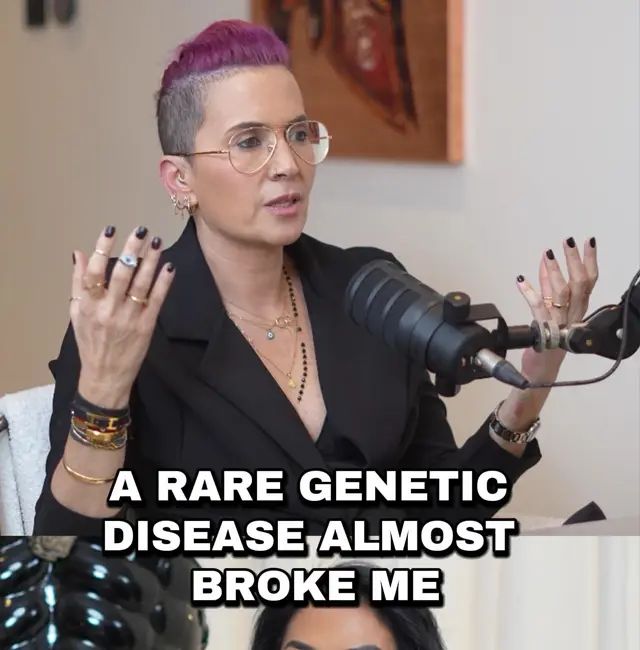
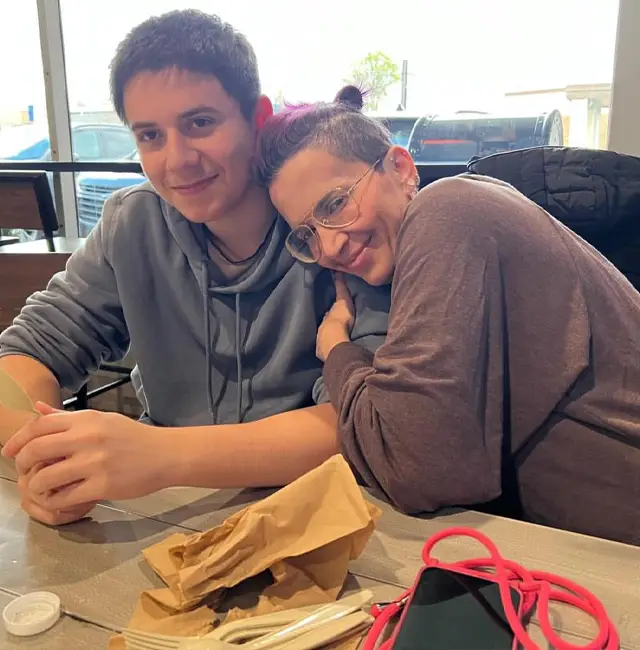
But after years of living with VHL, raising three children with the same disease, enduring surgeries, scans, fear, uncertainty, and rebuilding myself over and over again, I have learned something very different.
Resilience is not pretending life is easy.
Resilience is learning how to carry what feels impossible without letting it destroy your soul.
People often ask me how I do it. The truth is, there are days where I do not do it gracefully at all. There are moments I collapse internally. Moments where I am angry, exhausted, terrified, and heartbroken.
But over the years, I developed three rules that have helped me survive not only rare disease, but life itself.
Step One: Sit With Your Pain
This is the hardest one.
We live in a world obsessed with toxic positivity. Everyone wants you to “stay strong,” “look on the bright side,” or “move on quickly.”
I reject that.
When life hits you hard, sit with your pain.
Cry. Rage. Mourn. Feel the injustice of it. Let yourself acknowledge the fear, the grief, the disappointment, and the exhaustion. If you do not face pain honestly, it leaks into every corner of your life disguised as anger, bitterness, numbness, or anxiety.
Some of my darkest moments came sitting beside my children in hospital rooms after surgery, listening to machines beep while trying to convince myself not to fall apart. I learned that strength is not the absence of pain. Strength is allowing yourself to feel it without letting it consume you forever.
Pain needs to be witnessed.
Even by yourself.
Step Two: Focus on What You Can Control
Rare disease taught me very quickly that life is deeply unpredictable.
I cannot control genetics. I cannot control scans. I cannot control outcomes. I cannot control whether tumors grow or whether surgeries become necessary again.
But I can control how informed I become.
I can control whether I advocate for my children.
I can control whether I seek the best doctors, the best science, the best research, and the best possible care available in the world.
Knowledge gave me power.
Instead of drowning in fear, I learned to channel that energy into action. That journey led us to National Institutes of Health, where science, research, imaging, and medical advancement completely transformed our family’s future.
Focusing on what you can control does not erase pain, but it gives pain direction.
And direction creates resilience.
Step Three: Give Your Pain Meaning
This is the step that changed my life the most.
Suffering without meaning destroys people.
But suffering that serves a purpose can transform people.
For a long time, I asked myself, “Why us?”
Now I ask, “What can I do with this experience?”
I can speak openly about rare disease.
I can advocate for science and research.
I can support families who feel isolated.
I can raise awareness for VHL.
I can teach my children that even in hardship, they can still build beautiful lives filled with love, laughter, ambition, friendship, and joy.
Pain became lighter the moment it became purposeful.
Not because the suffering disappeared, but because it stopped being empty.
Today, when people describe me as resilient, I smile because resilience was never something I was born with.
It was built.
Built through sleepless nights in hospitals.
Built through fear.
Built through grief.
Built through learning how to stand back up every single time life knocked me down.
And if there is one thing rare disease taught me, it is this:
Human beings are capable of carrying far more than they think they can.
Especially when they carry it together.